Key Highlights:-
- OpenAI launched ChatGPT Health, a private, encrypted space for managing medical records and wellness data that is never used for AI model training.
- The tool integrates with b.well and Apple Health, allowing users to centralize lab results and fitness data to receive personalized summaries and appointment preparation.
- Built with 260+ physicians, the system uses a new “HealthBench” standard to ensure safety and clarity, though OpenAI warns it is not a replacement for professional diagnosis.
- Early feedback indicates the AI is helping patients catch potential medical errors and translate complex clinical notes into understandable language.
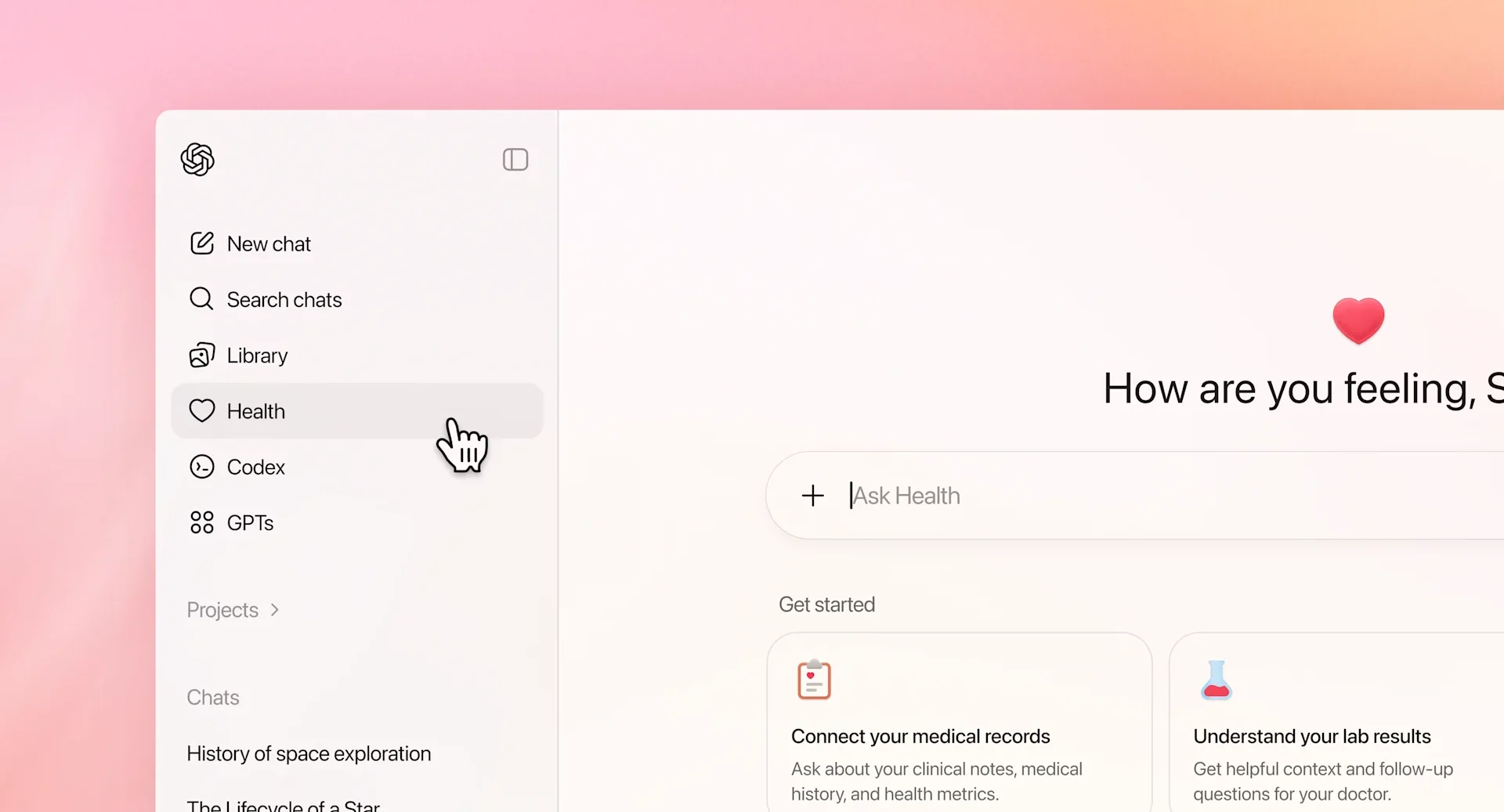
OpenAI announced Wednesday the launch of ChatGPT Health, a dedicated, private space within its platform designed to help users manage medical information. The new feature allows users to securely connect electronic health records and wellness apps to receive personalized insights while maintaining strict data isolation from standard conversations.
The launch addresses a common use case, with OpenAI reporting that over 230 million people globally ask health-related questions on ChatGPT every week. The service is currently available to a small group of early testers on Free, Plus, Pro, and Team plans outside of the European Economic Area, Switzerland, and the United Kingdom, with a broader rollout planned for the coming weeks.
If you choose, ChatGPT Health lets you securely connect medical records and apps like Apple Health, MyFitnessPal, and Peloton to give personalized responses. pic.twitter.com/Nv5sA2ifrV
— OpenAI (@OpenAI) January 7, 2026
Privacy First ChatGPT Healthcare Support
ChatGPT Health operates as a separate environment within the app, featuring “purpose-built” encryption and compartmentalized storage. To ensure privacy, conversations and files within the Health space are not used to train OpenAI’s foundational AI models. While ChatGPT may pull context from standard chats, such as a recent move or lifestyle change, to make health responses relevant, sensitive health data and “Health Memories” never flow back into non-health conversations.
Users in the United States can connect medical records through a partnership with b.well, a health data network. The platform also integrates with wellness apps including Apple Health, MyFitnessPal, Function, and Peloton. These integrations allow the AI to analyse lab results, track fitness trends, and help users prepare for doctor appointments by summarizing their latest clinical data.
Also read: [UPDATE: Fake Rumor] Microsoft could layoff upto 22,000 employees in January as AI spending climbs
ChatGPT Health Follows OpenAI’s ‘HealthBench’ Standard
OpenAI stated that ChatGPT Health was developed over two years in collaboration with more than 260 physicians across 60 countries. This group provided feedback on over 600,000 model outputs to refine how the AI communicates medical information. The model is evaluated against HealthBench, a new assessment framework designed to prioritize safety, clinical clarity, and appropriate escalation of care.
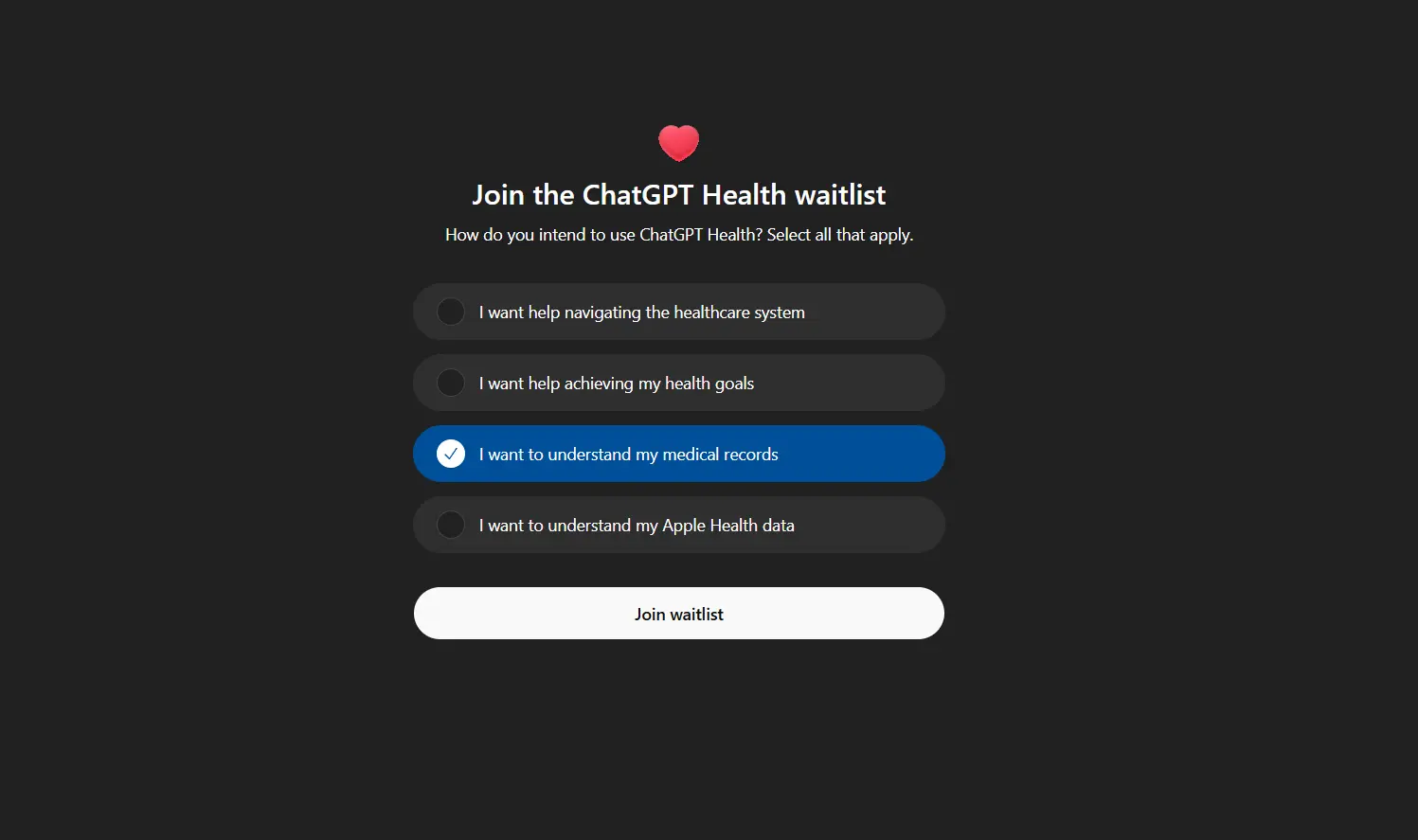
We’re rolling out ChatGPT Health to a small group of users so we can learn and improve the experience. Join the waitlist for early access.
— OpenAI (@OpenAI) January 7, 2026
We plan to expand to everyone on web & iOS soon.
Electronic Health Records and some apps are US-only; Apple Health requires iOS.…
The company explicitly stated that the tool is not intended for diagnosis or treatment and should not replace professional medical care. Instead, it is designed to help users understand patterns over time and translate complex medical jargon into plain language.
For users who want to sign up for the waitlist, can log into their ChatGPT accounts and follow-up on the link here.
Early Reception by Users
Early reception suggests the tool is filling gaps in a fragmented healthcare system. Fidji SimoJoin the Chatgpt Health waitlist, an OpenAI board member, detailed an instance where the AI flagged a potential drug interaction for a kidney stone infection that a resident physician had overlooked due to time constraints.
The launch of ChatGPT Health is really personal for me. I know how hard it can be to navigate the healthcare system (even with great care). AI can help patients and doctors with some of the biggest issues. More here: https://t.co/3mbS6a3OMc
— Fidji Simo (@fidjissimo) January 7, 2026
Simo noted that while doctors often have only minutes per patient, AI can synthesize entire medical histories to serve as a “second set of eyes.” Early users have reported using the tool to “connect the dots” between different specialists and to better understand insurance benefits and provider options.