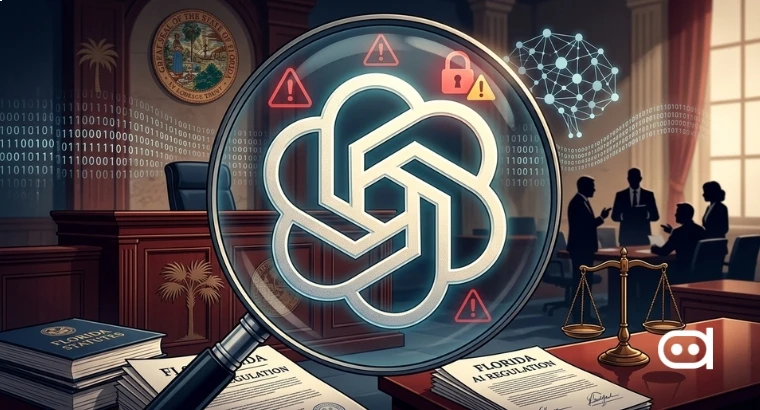
- Florida’s attorney general has raised concerns about potential harm to minors including exposure to self harm and unsafe AI interactions, resulting in OpenAI’s investigation.
- The investigation reports link AI chatbot use to cases which involve teen mental health struggles and alleged encouragement of suicide or self harm.
- Authorities are now going on with the investigation examining if the existing safeguards are adequate to protect minors and prevent harmful AI generated responses.
This investigation taking place in Florida shows a significant change in how governments are now approaching artificial intelligence, particularly in relation to minor users. The largely theoretical debate about AI ethics has now shifted to legal observation with officials questioning fast moving technology: has it outspaced the safeguards meant to protect vulnerable groups?
At the centre of this ongoing investigation are concerns about AI systems which are designed to be helpful and conversational, might unintentionally engage in harmful exchanges with minors. Official reports show links between chatbot conversations and cases of self harm or suicide among teenagers, which raises questions about the system’s ability to respond to emotionally sensitive situations.
The Rising Concerns about AI Conversations and Minors
One of the most disturbing aspects of this investigation is that AI systems might not always answer conversations involving distress in a way that prioritizes safety. Traditional platforms like Google pre-moderate harmful content, but AI systems generate answers in real time which can lead to unpredictable outcomes and unintended consequences especially when interacting with emotionally vulnerable users such as teenagers.
Officials have suggested that the current safeguards may not fully account for how teenagers seek support through technology, pointing to alleged cases of self harm and suicide encouragement among young users. This creates a unique and risky environment for minors and such easy accessibility complicates the issue. Reports claim that AI tools are widely available and usually lack age-restriction systems, hence allowing minors to interact freely with technology that may not be yet properly trained to handle their needs responsibly. Such easy access to AI tools has intensified concerns about protection, mostly because of the evidence of potential harm continuing to emerge.
The Future of AI Safety Regulations
Determining accountability in cases where AI might contribute to harm involving minors is a broader challenge highlighted by this investigation. Developers, platforms, or regulators: who is answerable to complex legal and ethical questions about a chatbot interaction being linked to real world consequences?
Lawsuits and cases involving AI and teenage users have shaped this debate, along with families alleging that chatbot interactions have contributed to mental health crisis and even suicide amongst teenagers. Regulators are being pushed by these developments to consider new rules to ensure that AI systems are able to safely handle sensitive topics.
Companies that develop AI technologies are also emphasizing on putting extra efforts to improve safety, including monitoring of these systems for high-risk interactions and implementing stricter content controls. Critics still argue that these measures would not be enough in a progressively evolving technological environment as the scale and speed of adoption to these measures can increase risks before solutions are completely in place.
Also read: OpenAI Upgrades ChatGPT Shopping While Retreating From Checkout
Wrapping Up
The Florida investigation reflects a rising global concern about balancing the benefits of artificial intelligence with the responsibility to protect its most vulnerable users. As AI becomes more involved in daily life, the experiences of minors, especially the ones dealing with mental health issues, are progressively shaping the conversations around safety and accountability. Whatever the outcome of this case is, it will have far-reaching implications for the entire AI industry and not just for one single company. The outcome will influence the building of future technologies and how well they are able to safeguard the people who need protection the most.