Key highlights:
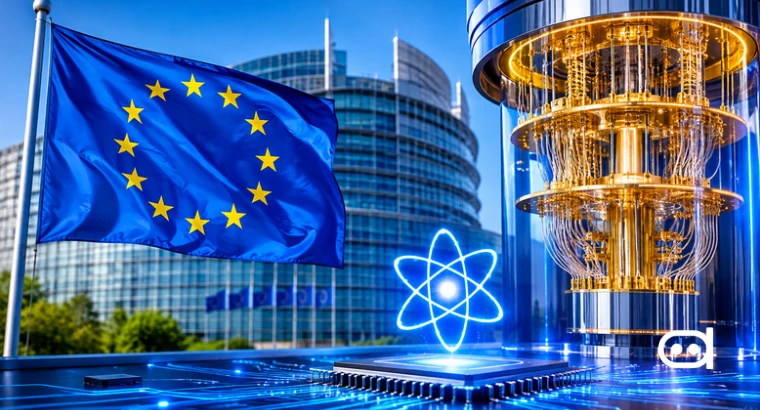
- The European Commission has announced a Quantum Act to build up Europe’s quantum technology industry and push the region to become a global leader by 2030.
- The Sovereign Tech Equity Fund (STEF) is set to mobilize up to €50 billion for quantum tech, AI, and other major sectors.
- EU countries would need to use post-quantum cryptography for key infrastructure by 2030, extending to other systems by 2035.
- The plan also aims to cut down on dependence on outside suppliers, help businesses, and put Europe in a better spot to take on the US and China.
The European Union is preparing to strengthen its position in the global technology sector as quantum computing emerges as the next major area of competition. On Wednesday, November 25, the European Commission rolled out its Quantum Act proposal, laying out plans to boost research, industrial development, and investment across Europe. They’re doing this after falling behind in the AI race and want to avoid making the same mistake with quantum tech.
The plan pulls together actions to support companies, improve access to funding, secure crucial supply chains, and get ready for future cybersecurity threats. At the same time, the Commission also proposed a new investment tool, the Sovereign Tech Equity Fund, to attract private money and help Europe rely less on tech from outside the region.
Turning Research Strength into Industrial Growth
The idea behind the Quantum Act is to take Europe’s strong track record in scientific research and turn it into real industrial power. Right now, one in three quantum companies is based in the EU, and organizations here hold 44% of all global quantum patents. That’s impressive on the research side, but turning it into successful business will take more support for companies ready to grow and put their technologies on the market.
The plan would set up special hubs, centers of expertise, and acceleration centers in every EU country. These places would offer technical help to small and mid-size businesses and give new projects what they need to become market-ready. The bigger goal is to create a connected network where research, funding, and business development move forward together.
There’s also a huge economic opportunity at stake. The Commission thinks the global quantum market could top €155 billion by 2040. McKinsey says quantum computing alone might create between $1.3 trillion and $2.7 trillion (€1.18 trillion to €2.46 trillion) of value for businesses by 2035.
STEF Targets Europe’s Private Investment Gap
One big issue for Europe is getting more private investment. The Commission says the EU’s public investment in quantum tech will hit €8.6 billion this year. In comparison, China is set for €13.6 billion, and the US for €5.3 billion.
But when it comes to private funding, the gap is even wider. Europe only pulled in €1.1 billion in private investment last year, while the US brought in €7 billion. The Commission thinks more private capital is crucial for European companies to grow and compete around the world.
The Sovereign Tech Equity Fund (STEF) is meant to tackle this. The Commission wants to bring in up to €6 of private money for every €1 of public funds. Private investors, EU members, and the European Investment Bank are expected to pitch in.
They plan for the fund to be up and running quickly, by 2028 at the latest, when the next EU long-term budget starts. It’ll also work alongside the European Competitiveness Fund, which should start in January 2028 with a proposed budget of €234.3 billion. This fund will pull existing support programs for industry and research together under one framework.
Cybersecurity and Supply Chain Protection
The rise of quantum computing brings up new security worries. Advanced quantum computers could break today’s encryption methods, leaving governments, businesses, and people exposed.
Experts often warn about what they call Q-Day, the day quantum computers are powerful enough to crack widely-used encryption. That’s why many have called for governments and businesses to start adopting cybersecurity tools that can stand up to quantum tech.
Under the Quantum Act, EU countries would need to shift their most important infrastructure and critical systems to post-quantum cryptography by 2030. Every other system would need to follow by 2035.
The plan also puts in place steps to monitor supply chains and identify which suppliers and components are crucial. Officials have found 47 key components, nine of which have no current supplier in the EU. New procurement rules would protect vital systems, but still allow non-EU companies to take part as long as they’re controlled from Europe and follow EU rules.
Industry groups have generally backed the proposal, but some want it to go further. The European Quantum Industry Consortium (QuIC), which represents over 240 organisations, is calling for procurement commitments of €300–500 million within six months of the law taking effect, and €7.7–12.3 billion over five years. They also want reserved STEF investments for quantum start-ups and scale-ups.
IBM and Cisco both stress the need for international partnerships, while the Business Software Alliance urges the EU not to shut the door on global cooperation even as it supports domestic growth. The Quantum Act will now move on to the European Parliament, and after that, to the European Council for consideration.