- Anthropic drew global attention in April 2026 after its claim about building an AI model too powerful to even safely release to the public.
- While the announcement was centered on a system which is reportedly capable of identifying serious software vulnerabilities, it was positioned as a responsible safety decision.
- Researchers and critics suggested that the move might also reflect a public strategy in the intensifying AI race while questioning both evidence and the timing.
Artificial intelligence is no longer about capabilities, it is about narrative. People were intrigued and concerned when Anthropic signaled that one of its internal systems linked to Claude’s lineup was too powerful for public release. In an industry already prone to dramatic claims, the idea of deliberately refusing to publicize an AI model stands out as both a warning and a marketing mastermind.
The company’s justification is valid and straightforward at the face value. The model has the capability to expose previously unknown cybersecurity flaws at scale which raises the risk of people with spiteful intentions exploiting such capabilities. The argument carries weight as digital threats keep escalating but the absence of verifiable evidence has caused some doubts. Experts point out how no transparent benchmarks or peer-reviewed validation makes it difficult to assess the system and figure out if it is a genuine leap or a framed possibility.
“Too Dangerous to Release”
The phrase “too dangerous”, in the context of AI, evokes both science fiction and real world anxiety. Anthropic positioned itself as a safety official rather than being just another competitor chasing scale by framing its decision around control.
The framing is what matters. The AI sector is increasingly defined by public trust and not only by technical breakthroughs. Governments are watching closely, regulators are still catching up, and users are growing more aware of risks. Signaling caution can be as valuable as demonstrating capability.
The strategy cuts both ways as without clear evidence, there will be a risk of extreme power being interpreted as hype. Finding theoretical vulnerabilities is not the same as enabling real-world exploitation at scale according to some cybersecurity researchers. Others also note that similar claims that surfaced before in the tech industry often blur the line between genuine concern and strategic positioning.
By keeping the details to themselves, the company maintains control over the narrative while avoiding direct scrutiny, hence making it difficult to disapprove a capability that is never fully demonstrated.
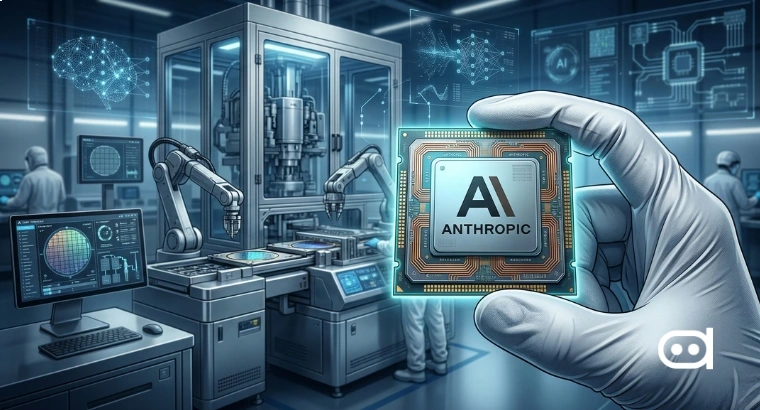
Also read: Anthropic To Join the Race to Build its own Custom AI Chips
Is Strategy being Disguised as Safety?
Anthropic’s move reflects how safety is no longer just a technical limitation but a competitive asset. Companies are progressively defining themselves as not just what their models can do, but by how responsibly they claim to deploy them. This has several advantages:
- It’s appealing to regulators who are under pressure to prevent harm without constant need for stifling innovation.
- It reassures enterprise customers who are concerned about reputational risk.
- It separates companies from a crowded field where raw performance gains become harder to communicate to the public
Optics like the announcement arriving amid intense competition for funding, talent, and influence, are hard to ignore. Carefully crafted messaging, high profile media coverage, and philosophical discussions about AI’s future contribute to a bigger effort in shaping perception.
According to sources, there are also some practical considerations such as running advanced AI systems which require huge amounts of computational resources and scaling them for public use is usually costly and complex. Some analysts believe that not releasing a model can sometimes highlight logistical restraints and ethical caution. The major question is if the decision is primarily about safety or if safety is the most convincing way to explain a strategic pause.
Wrapping Up
Anthropic’s “too powerful to release” move shows the evolving dynamics of the AI industry. It highlights the way the claims of capability, responsibility, and restraint are twisted together. Doesn’t matter if the model in question actually represents a genuine breakthrough or a very carefully framed narrative, the impact would remain the same: it shifts the conversation.
A new kind of competition emerges from this and it won’t be fought in just code and compute, but in credibility. The companies persuade the world that they can trust them with building powerful tools, hence, the real battleground is not technology but the story told about it.