Earlier today, we covered rumors that hinted Anthropic might release Claude Opus 4.6 and Opus 4.6 Thinking today itself. Well, Anthropic has now shut all the rumors by officially launching Claude Opus 4.6. The upgraded model comes with improved coding, research, and everyday office tasks. The biggest highlight of this model is that it adds the first 1M token context window in beta for its Opus-class models. Here’s what else has been improved—keep reading to know more about Claude Opus 4.6.
Claude Opus 4.6 plans better, handles everyday work, and beats other models in benchmarks
In the announcement post, Anthropic mentions that Claude Opus 4.6 can “plan more carefully, sustain agentic tasks for longer, and operate more reliably in larger codebases.” Besides that, the latest model comes with better code review and debugging skills, which allow it to catch its own mistakes.
If you are someone who spends your day around financial transactions and spreadsheets, Claude Opus 4.6 should be your go-to choice. Anthropic boasts that this model excels in financial analysis, spreadsheet processing, document management, and presentations. “Within Cowork, where Claude can multitask autonomously, Opus 4.6 can put all these skills to work on your behalf,” notes Anthropic in the announcement post.
You may also like: Here’s what leaks and rumors tell us about the Claude Sonnet 5 release
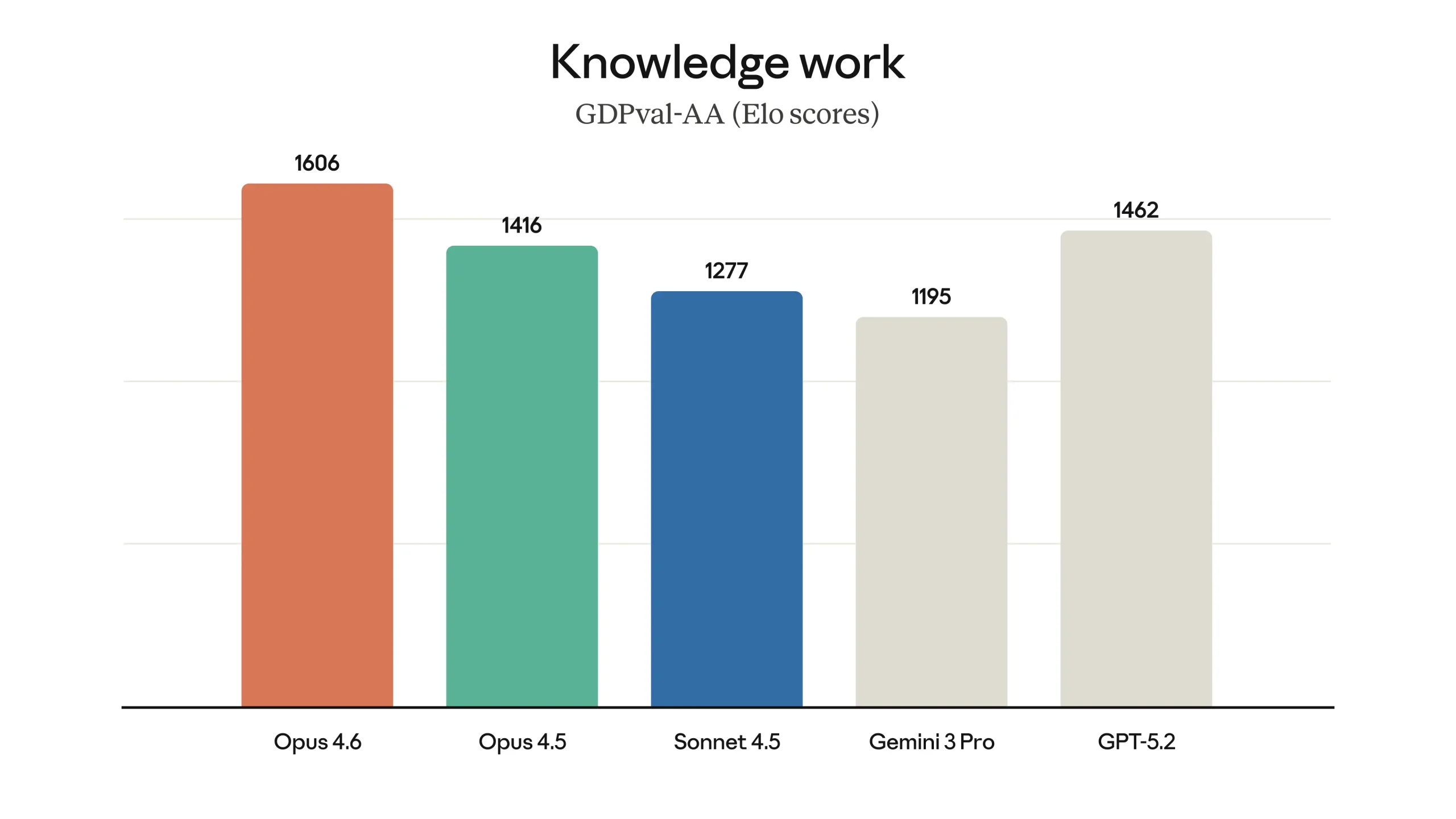
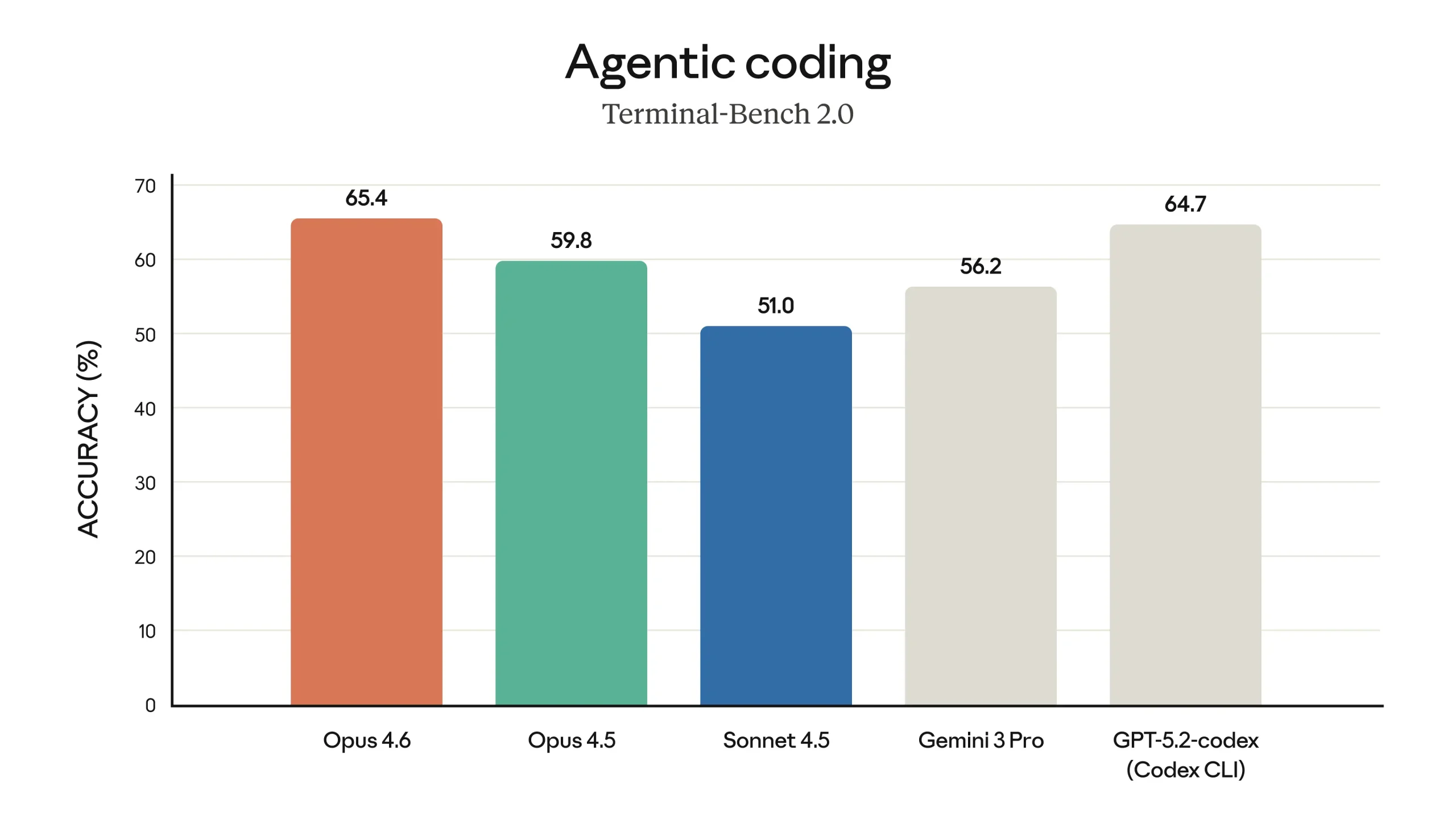
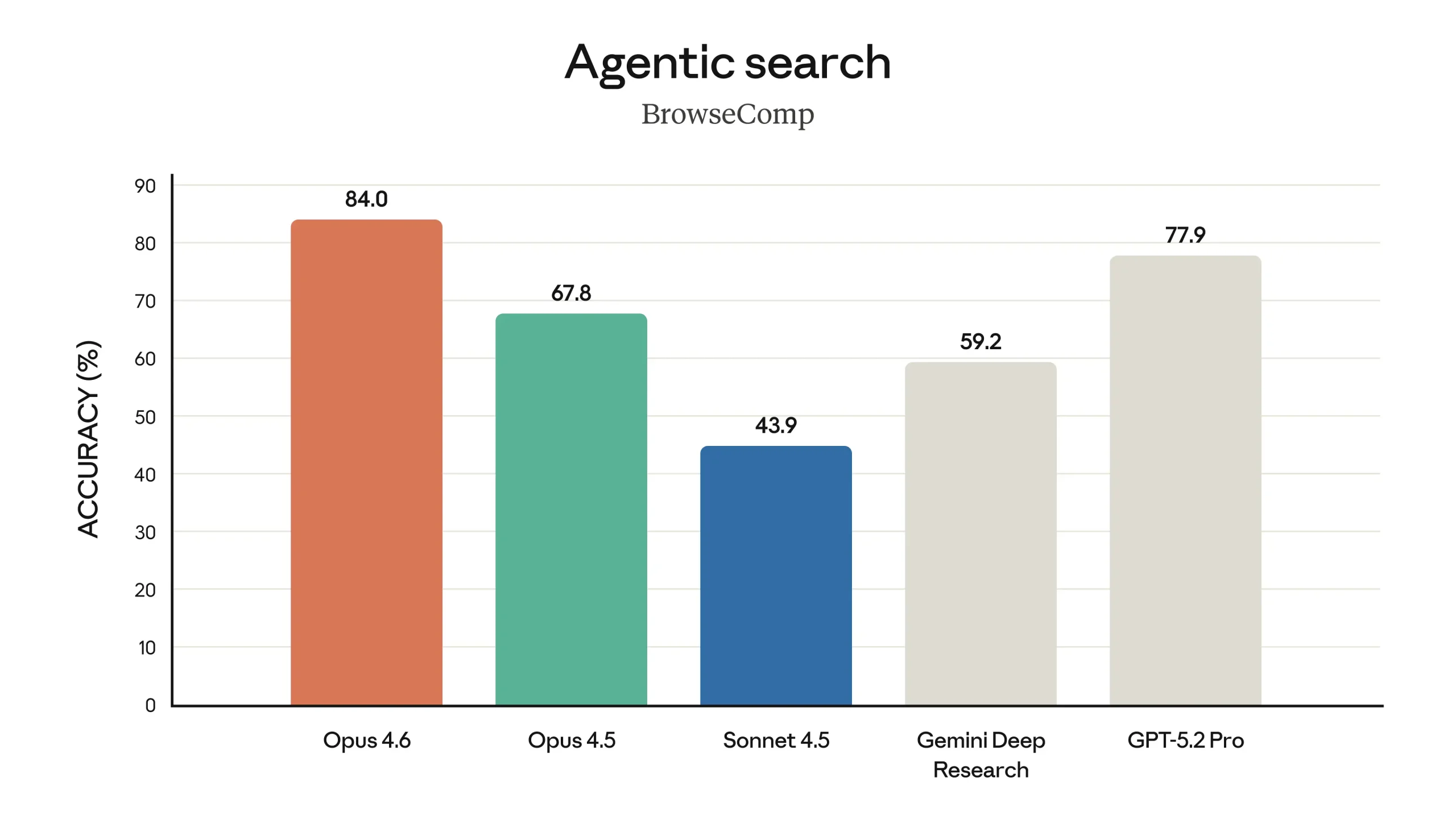
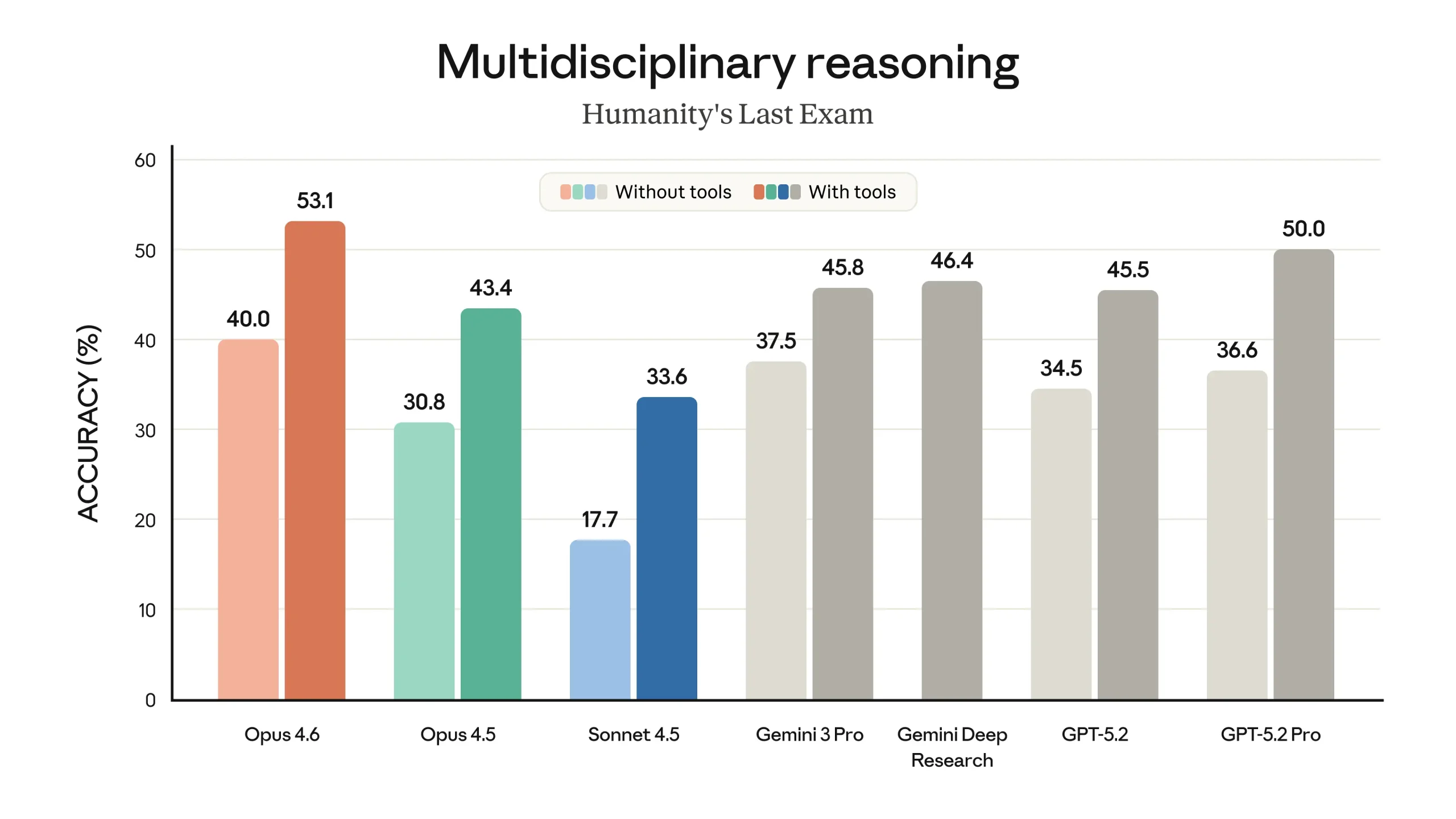
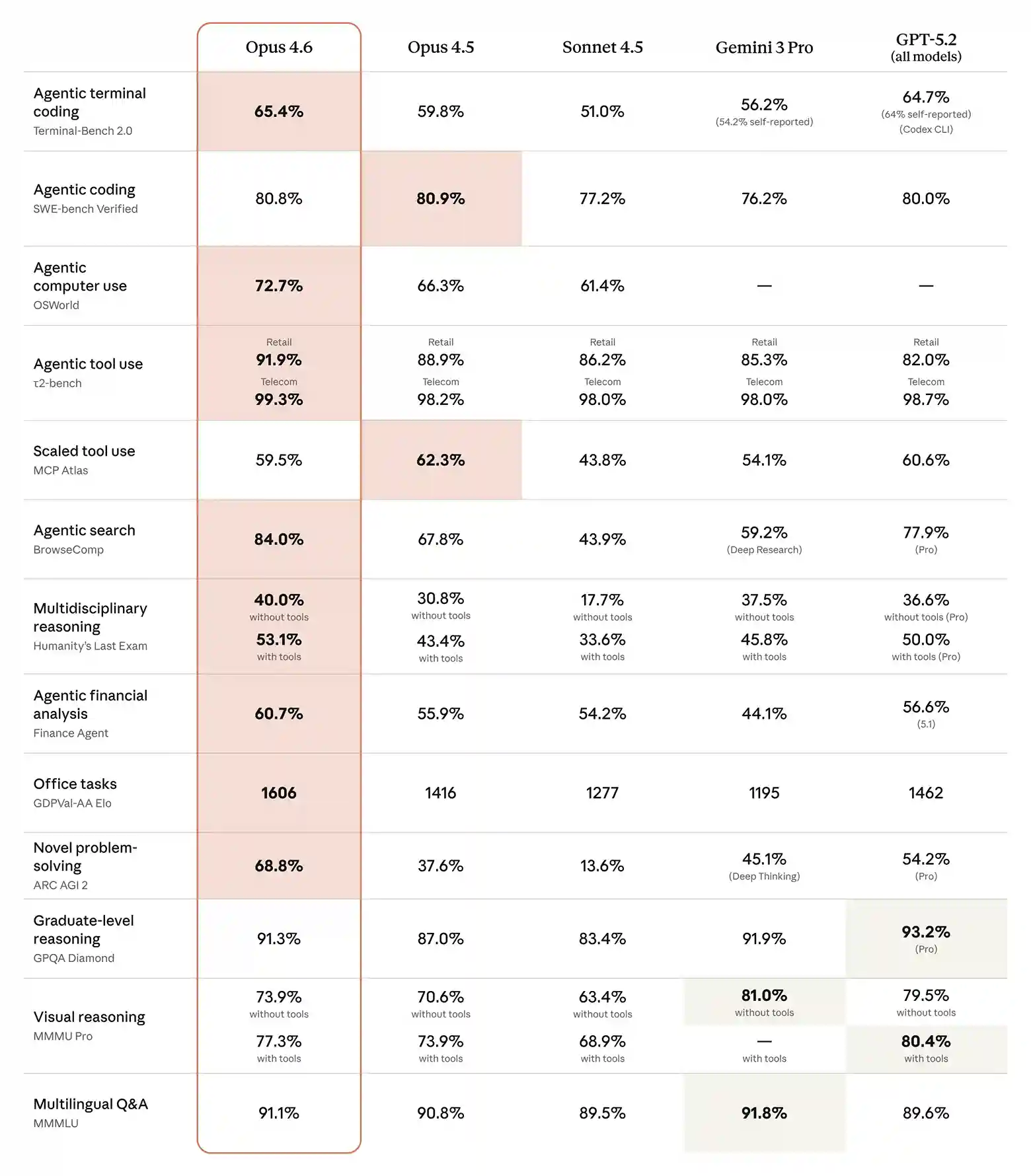
Since Claude Opus 4.6 is an upgraded model, you’d expect it to beat other models in several benchmarks. Well, it does, as Anthropic says the latest model scores highest on the agentic coding evaluation Terminal-Bench 2.0. Additionally, Opus 4.6 secures first rank in Humanity’s Last Exam and outperforms GPT-5.2 and its own predecessor on GDPval-AA. For the uninitiated, GDPval-AA is a test of economically valuable tasks in finance, legal, and other sectors. Meanwhile, in the BrowseComp evaluations, Opus 4.6 also showed its superior ability.
Not to forget, Claude Opus 4.6 also brings longer-context reasoning, as it can track hundreds of thousands of tokens, pick up subtle details, and reduce “context rot” in long sessions. Anthropic notes, “Opus 4.6 performs markedly better than its predecessors: on the 8-needle 1M variant of MRCR v2—a needle-in-a-haystack benchmark that tests a model’s ability to retrieve information ‘hidden’ in vast amounts of text—Opus 4.6 scores 76%, whereas Sonnet 4.5 scores just 18.5%.”
You may also like: Sam Altman Slams Anthropic’s Super Bowl Ad, Says the Campaign is “Clearly Dishonest”Knowledge Work
The latest model improves safety, adds new API controls, and expands Office tool integration
Anthropic says Claude Opus 4.6 delivers its intelligence upgrades without sacrificing safety. The model shows low misaligned behavior, fewer over-refusals, and matches the strong alignment of Opus 4.5. It also underwent Anthropic’s most extensive safety testing yet, including new wellbeing and misuse evaluations. Moreover, Anthropic says it has added new safeguards where Opus 4.6 shows stronger capabilities, especially in cybersecurity. The company introduced six new probes to detect misuse and is also using the model to find and patch vulnerabilities in open-source software, with safeguards evolving as threats change.
Developers get new controls with the API, which bring multiple features. First up, there’s Adaptive thinking, which allows Claude to decide when deeper reasoning is useful. Meanwhile, effort settings adjust intelligence and speed, whereas context compaction allows longer-running tasks to complete without hitting limits. Outputs now reach 128K tokens, with premium options for tasks above 200K. Notably, Anthropic is also offering US-only inference this time around.
You may also like: Meta’s Avocado AI Model Reportedly Outperforming Rivals Even Before Launch
If you are someone who juggles files, presentations, and spreadsheets, Anthropic has some good news for you. Claude now integrates more deeply with office tools. It handles complex Excel tasks, structures data automatically, and completes multi-step changes efficiently. That data can then be turned into on-brand PowerPoint presentations, with Claude understanding layouts and design. PowerPoint support is currently in research preview. Moreover, Claude Opus 4.6 is available today via claude.ai, the API, and all major cloud platforms.