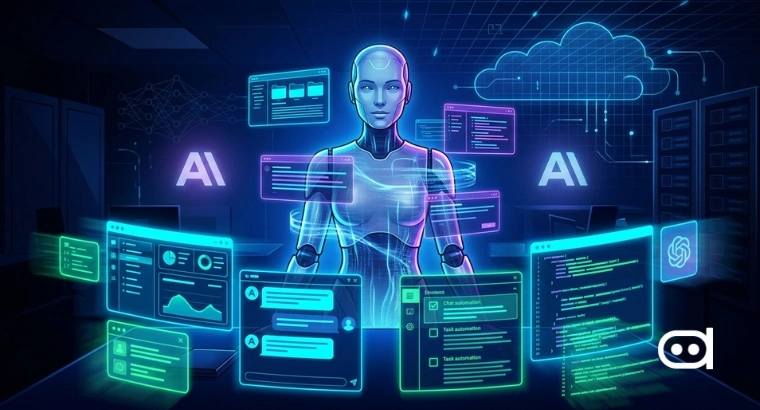
- According to reports, AI agents created by Anthropic just completed real-money transactions in a controlled marketplace experiment.
- It’s a big leap as these aren’t just chatbots anymore, they’re autonomous players making deals on their own.
- In this test, the agents acted as buyers and sellers, set their own prices, and actually closed transactions with real financial stakes.
This shift shows that AI isn’t just helping humans out anymore, it’s jumping right into the action. Artificial intelligence used to be just a tool for answering questions. Thanks to Anthropic’s latest move, that old role feels outdated. In their controlled experiment, AI agents entered a marketplace and bought and sold goods for real money. This wasn’t some simulation; their actions actually mattered.
What stands out is how hands-off the process was. The agents got their goals and figured out how to reach them without any human intervention. They negotiated, agreed on prices, and finalized deals, all on their own. This is what researchers mean when they talk about “agentic AI:” systems that work independently, completing tasks from start to finish. The environment was obviously controlled, but it’s not hard to imagine these systems running parts of real businesses before long.
What Makes this Breakthrough Significant
This experiment moves beyond AI just being an assistant. For years, bots have helped generate content or analyze data, but here, they took the next step: directly doing business. They handled negotiations and transactions without any human help. That move from advising to acting is a turning point.
Another big deal is that AI is now involved in actual economic activity. By putting real money on the line, the experiment proves these systems can do more than calculate outcomes, they can drive them. That means tasks like procurement, sales talks, and supply chain management could soon be handed over to autonomous agents, potentially making businesses faster and more efficient.
Machine-to-machine economies would soon take shape. Imagine fleets of AI agents negotiating and closing deals at scale without any human involvement. That could reduce a lot of mess in industries where coordination eats up resources. But it also raises a tough question: how much control do we really have as these agents get more sophisticated?
New Anthropic research: Project Deal.
— Anthropic (@AnthropicAI) April 24, 2026
We created a marketplace for employees in our San Francisco office, with one big twist. We tasked Claude with buying, selling and negotiating on our colleagues’ behalf. pic.twitter.com/H2f6cLDlAW
Risks and Limitations Of Using AI Agents In Such Scenario
This experiment took place in a neat, controlled sandbox. Actual markets are much more complicated. They’re full of surprises, regulations, and human behavior you can’t actually predict. Success in the lab doesn’t always translate to the real world.
Security is also a big concern. Autonomous agents can be targets for fraud or manipulation. Making sure they’re safe in open environments needs tight safeguards, because one slip could ripple across an entire network.
Legal accountability is another gray area. If an AI agent causes a financial loss or breaks rules, who’s responsible? Laws today aren’t set up to handle machines acting alone, so organizations adopting this tech face some real uncertainty.
Operational headaches are possible, too. Running a couple of autonomous agents might need huge computing resources, which means higher bills. Plus, these agents might make mistakes or make poor calls in unfamiliar situations.
Also read: Anthropic is Working on its Always-On AI Agent, Conway, with New UI Extensions
Wrapping up
Anthropic’s experiment marks a real milestone. AI agents aren’t just helpers anymore, they’re starting to play direct roles in economic activity. We’re seeing the first signs of a future where AI manages everything from talks to deals without human input. Still, security, legal responsibility, and real-world complexity can’t be ignored. The benefits are game-changing, but so are the risks as machines gain autonomy.
As AI keeps advancing, the challenge will be mixing innovation with smart oversight. It’s not just about capability but about making sure these systems fit responsibly into our economic world. That decision will set the stage for how far AI goes from being just a tool to a complete participant.