Key Highlights
- TikTok’s U.S. operations will transfer to a new joint venture on January 22, 2026.
- Oracle, Silver Lake, and Abu Dhabi’s MGX will collectively control 45% as managing investors.
- ByteDance and its affiliates will retain nearly 50% combined ownership.
- Critics argue the deal worsens privacy, political influence, and national security concerns.
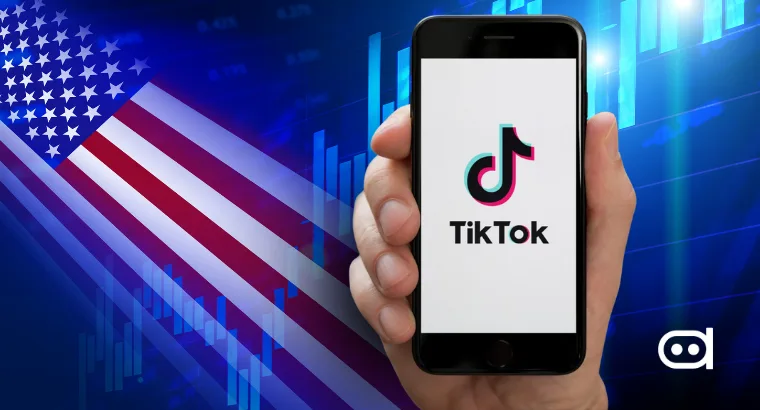
The long-awaited change in TikTok’s ownership in the U.S. is now officially taking place. The deal, which has been announced by TikTok CEO Shou Chew, creates a new company, the TikTok USDS Joint Venture LLC, which will be in charge of content moderation, data governance, and the U.S. business starting January 22, 2026.
This deal marks the end of the app’s chaotic political past for a while, at least. The app was frequently threatened with a total ban due to various issues such as Chinese ownership, data privacy, and national security. President Donald Trump signed an executive order finalizing the deal in September after earlier postponing enforcement of legislation that would have effectively removed TikTok from U.S. app stores.
Who’s the Owner of TikTok U.S. Now?
As per the finalized arrangement, the trio of Oracle, private equity firm Silver Lake, and Abu Dhabi state investment fund MGX will operate as the three managing investors.
“The new U.S. operations of TikTok will have three managing investors that will collectively own 45 percent of the company: Oracle Corporation, Silver Lake, and MGX. Another 5 percent will be owned by other new investors, 30.1 percent will be held by affiliates of certain existing investors of ByteDance, and 19.9 percent will be retained by ByteDance.”
The distribution of ownership has led to the assertion that the transaction does not really sever the platform’s ties to China, which was one of the main issues that prompted the government to intervene in the matter.
Promises on Data and Algorithms
According to TikTok CEO Shou Chew’s internal memo to employees, the deal includes provisions aimed at addressing long-standing regulatory concerns.
“I want to take this opportunity to thank you for your continued dedication and tireless work. Your efforts keep us operating at the highest level and will ensure that TikTok continues to grow and thrive in the U.S. and around the world,” Chew wrote. “With these agreements in place, our focus must stay where it’s always been—firmly on delivering for our users, creators, businesses, and the global TikTok community.”
TikTok is going to use U.S. users’ data to train its content recommendation algorithm again, wherefore the company claims that the feeds will be secured against foreign interference. Oracle will be the one to supervise the data security operations, and the new partnership will have the power to decide about content moderation and related policies in the United States.
It is worth mentioning that such guarantees were given years back when Oracle was first appointed as a partner for data security during the Biden presidency. Critics think that the new deal mostly recycles the old commitments, though it does represent some ownership changes that are favorable to the investors with political connections.
Also Read : Best 5 AI Meme Generators: Unleashing Creativity for 2026’s Internet
Growing Criticism and Political Fallout
The agreement has met with very strong opposition from media critics and digital rights advocates who see it as the “worst possible outcome” in the TikTok case. Opponents to the deal claim that rather than solving the root problems of privacy control, education, or responsibility of platforms, the deal just implies that one of the planet’s most powerful social media platforms will be, to a certain extent, controlled by a few wealthy individuals who are in sync with the government politically.
There is also concern about the bipartisan cadre who have made the deal possible. The Republicans, who had been advancing the divestment campaign, were the main force behind the push, while the Democrats, who had been supporting the ban-related legislation, were not.