Science explains the mechanism of our existence, while it also quietly powers almost everything around us. Although AI has come this far, the everyday tools used by scientists feel dated, with many still sticking with old tools to write, revise, and collaborate on research. Research papers are still drafted across multiple platforms, equations live in separate files, citations are managed elsewhere. Well, OpenAI has just put its foot forward to fix that.
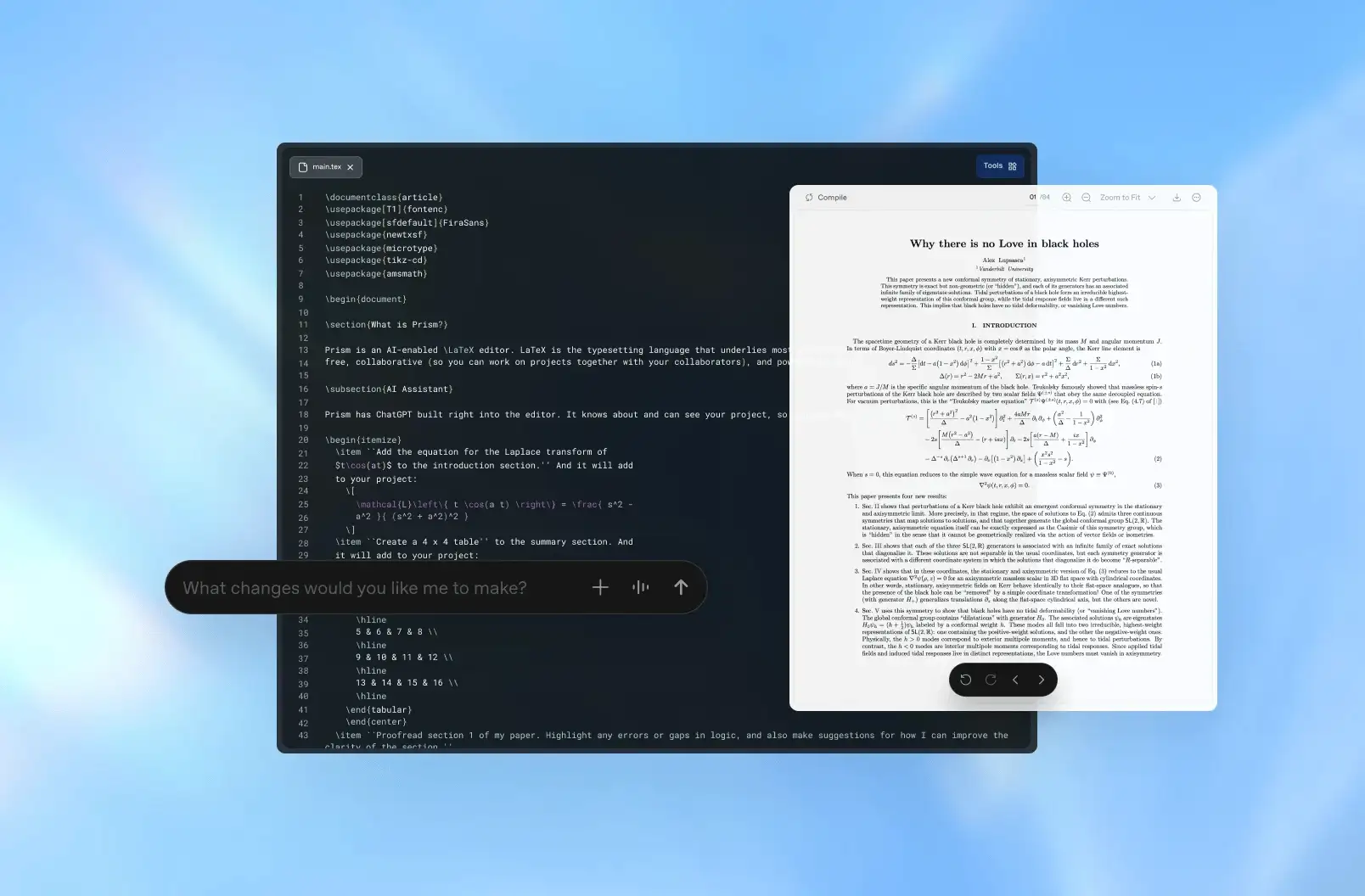
Today, the AI giant launched Prism, which is a new, free workspace designed specifically for scientific writing and collaboration. OpenAI’s Prism is powered by GPT-5.2 and it is available starting today for anyone with a ChatGPT personal account. Folks with Business, Enterprise, and Education plans will get Prism’s access in the coming days.
Prism offers a more connected way to write research papers
Prism looks to bring the decentralized workflow into one place. Thanks to the new, free AI workspace, researchers will be able to work inside a single, cloud-based, LaTeX-native environment. This cuts the obvious hassle of scientists and researchers juggling through text editors, PDFs, LaTeX compilers, reference managers, and separate chat tools. Since the GPT-5.2 model is built directly into the workspace, it operates within the context of the document itself, not alongside it.
That level of integration allows researchers to draft and revise papers while keeping the full structure, including equations, citations, figures, and surrounding sections, in view. Not to forget, Prism can also help you to explore ideas, improve arguments, and reason through complex sections without breaking focus or copying text between tools.
For those unaware, Prism builds on Crixet, which is a cloud-based LaTeX platform that OpenAI previously acquired. With Prism, multiple co-authors can work together simultaneously, with changes syncing instantly in real-time.
You may also like: OpenAI Pledges to Cut Water Use and Cover Energy Costs for Data Centers
Free access, fewer barriers
One of Prism’s biggest features is that it’s free to use and supports unlimited projects and collaborators. That’s not all; you won’t even require subscriptions or seat limits. OpenAI says it wants to lower the barrier to high-quality scientific writing tools by allowing more researchers, students, and educators to participate fully in the research process. OpenAI has further noted that some advanced features will roll out over time through paid ChatGPT plans. However, the core experience remains open to anyone starting today