Key Highlights:
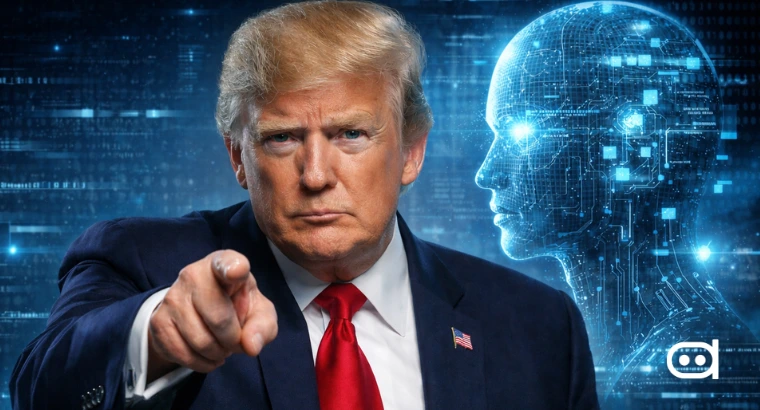
- After months of uncertainity, the Trump administration has officially opened doors for NVIDIA to ship its H200 AI chip to China, with a condition.
- Last week, the company was said to be mulling over plans to increase production of the AI chip for the same.
- Now, a new report hints that NVIDIA plans to ship the AI chip to China by mid-February next year.
After demand from China soared high, followed by some leniency in the H200 chip export rule by the Trump administration, NVIDIA has once again found itself in a position where it has to adjust its AI chip strategy. However, the approval from the U.S. government isn’t straight-forward. The Trump administration has set a condition of 25% fee on each sale.
After Trump eases China export rules, NVIDIA plans to ram-up production of H200 AI chips
Last week, reports came in that NVIDIA reportedly has told Chinese customers that it was mulling over the idea of ramping up the production of H200 AI chips after demand quickly exceeded existing supply.
From NVIDIA’s POV, this creates both an opportunity and a headache. On paper, Chinese tech giants such as Alibaba and ByteDance are eager to secure H200 chips, which remain among the most powerful AI processors they can realistically access.
The trimmed down version of NVIDIA’s China-specific H20 is nowhere compared to the H200 AI chip in terms of performance. The chipmaker is currently pouring resources into scaling its newer Blackwell platform while laying the groundwork for its next-generation Rubin architecture. As a result, H200 units are limited, and increasing output is not as simple as it sounds.
You may also like: NVIDIA Unveils Nemotron 3 Family of Open Models for Agentic AI Development
The chipmaker plans to ship the AI chip by mid-February 2026
Now, Reuters exclusively reports that NVIDIA has told Chinese clients that it plans to begin shipping H200 AI chips before the Lunar New Year holiday in mid-February. People familiar with the matter told Reuters that the initial shipment is expected to be fulfilled from existing inventory rather than fresh production. Per the report, these shipments could total between 5,000 and 10,000 chip modules, equivalent to roughly 40,000 to 80,000 individual H200 chips.
That being said, nothing is confirmed as of now, because China has yet to formally approve any H200 purchases. Emergency meetings have reportedly been held to discuss whether imports should be allowed at all. One proposal under consideration would require H200 purchases to be bundled with a certain ratio of domestically produced AI chips, an effort to protect China’s long-term semiconductor ambitions.
You may also like: NVIDIA CEO Demands Companywide Adoption of AI
China is concerned about wide adoption of NVIDIA’s AI chip
China’s concern is not surprising, though. On one hand, it has tech giants like Alibaba and ByteDance who are quite eager to import the best AI chip that they can get at this point. On the other hand, the country wants to protect its local AI chip manufacturers. Officials worry that widespread adoption of the H200 could slow progress at home, as demand for AI chips is already exceeding what local suppliers can deliver.
For NVIDIA, the path forward depends on more than customer interest. Demand is clearly there. The real variables are geopolitics, manufacturing capacity, and how both the U.S. and China choose to move next. Whether the company ultimately ramps up H200 production, or limits shipments to existing stock, will likely be decided as much in government offices as in the company’s manufacturing facility.
Do you think China will allow import of NVIDIA’s H200 chips? Let us know in the comments below.