CES 2026 has become the center stage for some of the unique and bold product announcements, including AI wearable devices, from some popular companies and startups that we barely heard of last year. Talking of popular companies, Motorola has showcased its latest prototype that suggests the company isn’t just thinking about smartphones or laptops anymore; it seems ready to penetrate a new product category.
Motorola’s minimalist wearable AI device looks like a pendant, packs a camera, but skips the screen entirely
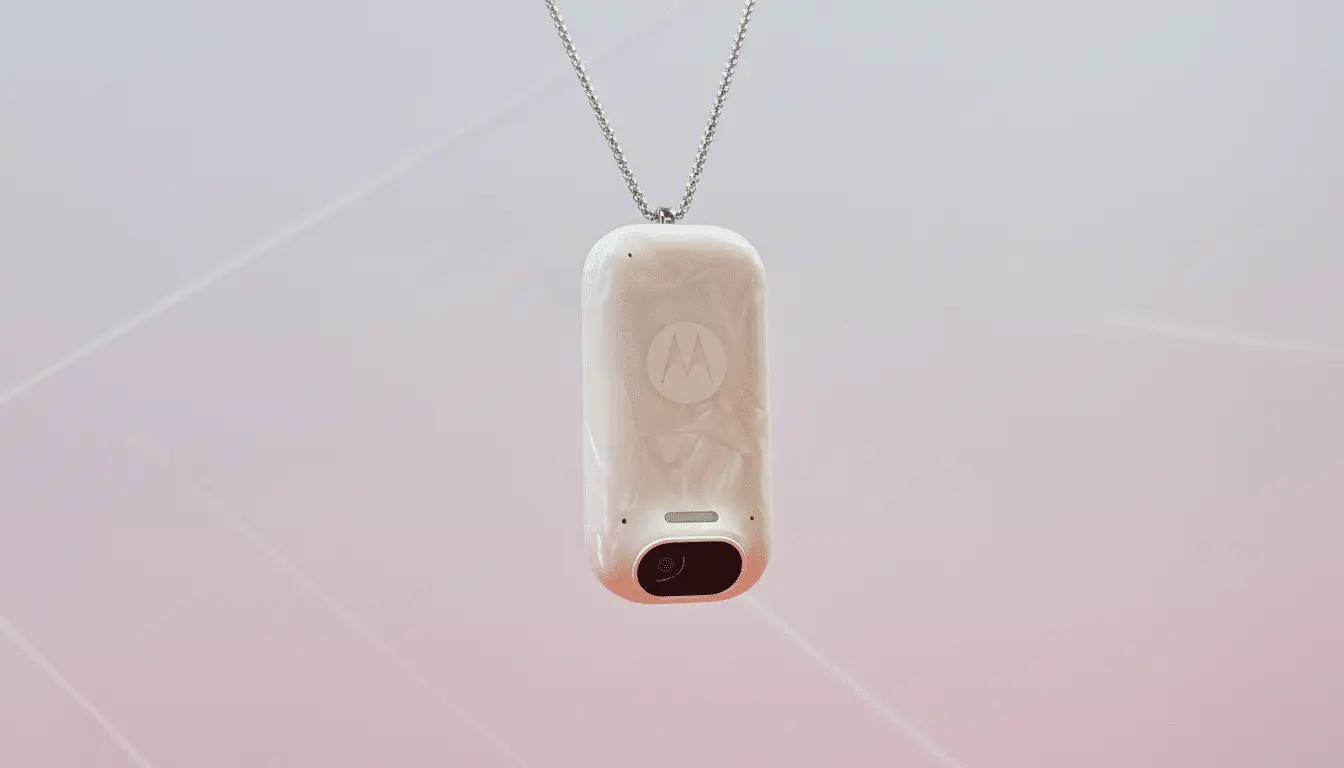
The Lenovo-owned brand has revealed a pendant-shaped AI companion. Interestingly, it isn’t some bizarre product or half-baked product tease. Motorola has shown how an AI assistant could live with you, quietly, and actually be useful.
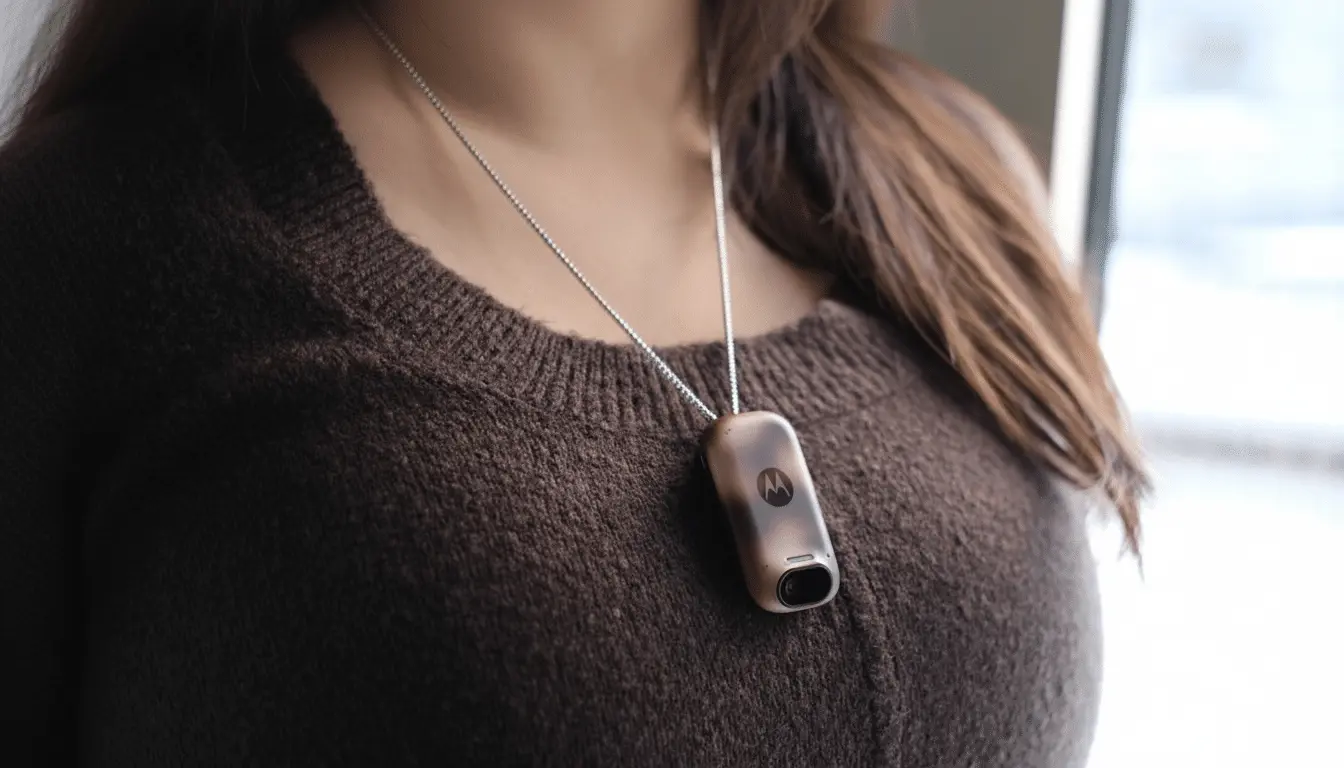
The wearable device comes in the form of a small drop-shaped pendant on a thin chain. The device itself doesn’t have any display or physical button. It rather relies on microphones, a tiny speaker, and a camera and sensor array tucked discreetly into one end.
Now, you must be wondering how it is supposed to work, right? Well, Motorola says that you can talk to the AI-powered pendant. It seems what you see, using the tiny camera, responds to your queries without asking you to tap, swipe, or stare at another screen.
Speaking of wearable AI devices, Plaud also announced its new NotePin S AI notetakerMotorola’s minimalist wearable AI device, alongside a new desktop app for Windows and macOS. That’s not all; Razer also unveiled a wearable AI headset concept that can do similar things as Motorola is promising with its latest wearable AI prototype.
Qira brings action, not just answers
Everything you ask about the wearable AI device, it is handled by Motorola’s new Qira assistant. As seen in the demo videos, the AI-powered pendant identified objects, read text from printed material, summarized information, and then went a step further. It triggered actions directly on a paired Android phone.
In one example, Qira scanned a flyer, recognized a location, opened Google Maps, and autofilled the destination automatically. That kind of follow-through matters. It moves wearable AI beyond talking and into doing.
You may also like: Everything AI at CES 2026 So Far
That being said, there’s no word on battery life, privacy controls, and pricing. Putting it simply, Motorola is rather careful, rather than promising anything, which is why we are assuming that the product won’t launch in the market anytime soon.