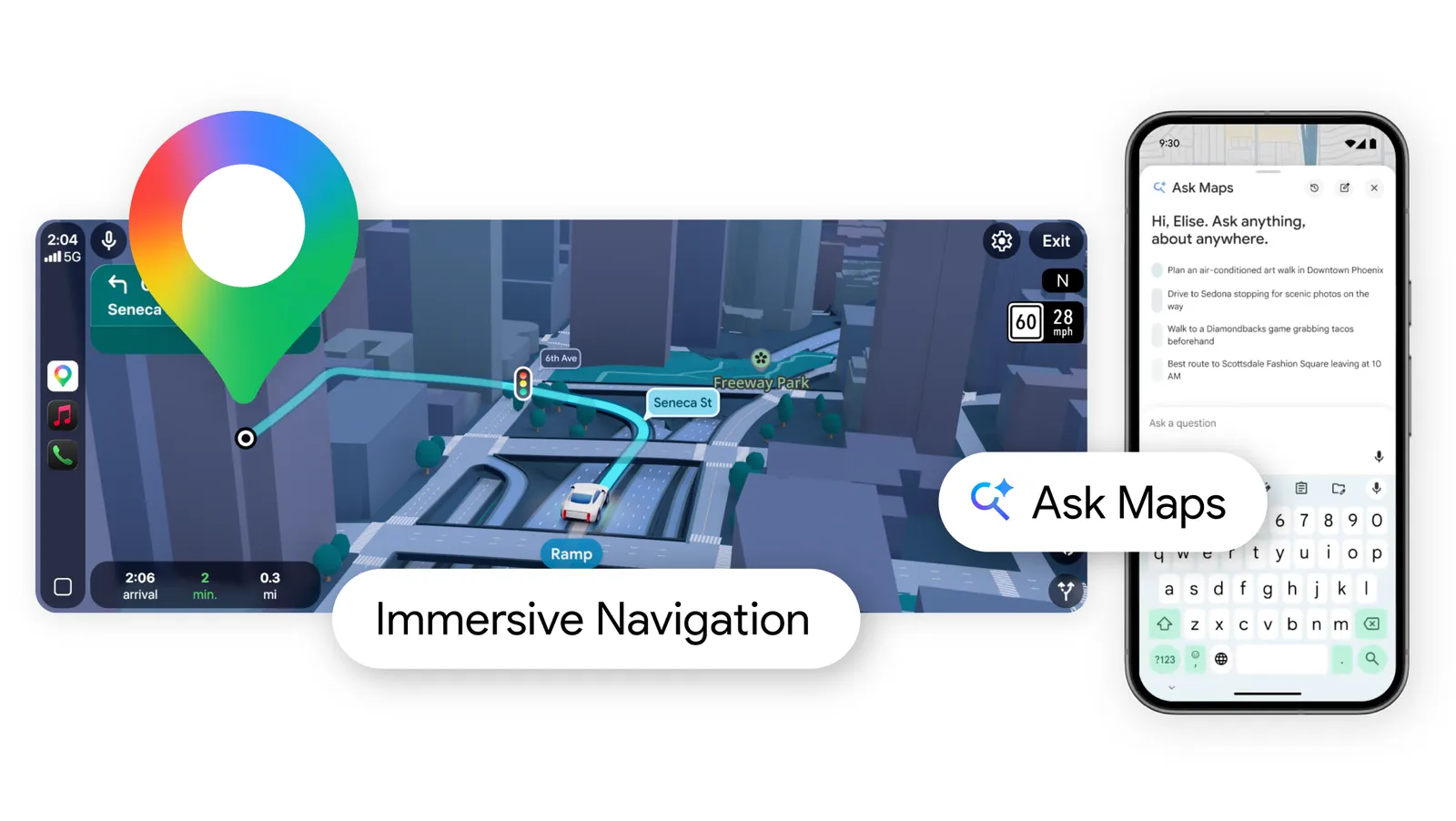
Google is gradually making Gemini-powered features available in its core apps. Today, the company has announced that it is rolling out a major Gemini-powered feature in Google Maps to change how people search for places and navigate roads. The two major features discussed by Google in its blog announcement are “Ask Maps” and “Immersive Navigation.” The company describes it as the biggest navigation overhaul in more than a decade. According to Google, these new features are designed to transform Maps beyond traditional search tools.
As of now, we manually look for locations or places within Google Maps. Well, that’s completely changing. You can now ask conversational questions directly within the app and receive personalized recommendations alongside a visual map.
Ask Maps turns Google Maps into a conversational assistant
The first feature, Ask Maps, brings a conversational interface powered by Google’s Gemini models. You can simply ask detailed, real-world questions about places and receive answers based on Maps’ massive dataset of locations and user reviews. Google says the feature analyzes information from more than 300 million places, along with insights contributed by a community of over 500 million Maps users. This data allows Ask Maps to provide personalized suggestions, accessing information from your previous searches and saved locations.
As an example, Google mentions that travelers planning multi-stop road trips can ask for recommended stops between destinations. The system can respond with routes, estimated arrival times, and tips from other users, including popular viewpoints or hidden trails. Additionally, Ask Maps also integrates with booking and sharing tools inside Maps. Once a location is selected, you can quickly reserve tables, save destinations, or share plans with friends directly from the app.
The feature is now rolling out in the United States and India on Android and iOS devices, with desktop support expected later down the line.
You may also like: Google Is Using 5 Million News Articles and Gemini to Predict Flash Floods
Immersive Navigation makes driving seamless
The next feature that Google highlighted in today’s announcement is Immersive Navigation. In simpler words, it’s basically a redesigned driving experience that adds a more detailed visual view of roads and surroundings. The new feature includes 3D representations of buildings, terrain, and overpasses, which should help drivers better understand the environment around them. Maps will also highlight important road elements such as traffic lights, crosswalks, stop signs, and lane details.
You may also like: Google Photos adds visible classic search toggle after users criticize “Ask Photos” feature
Google says that Gemini models analyze Street View and aerial imagery to create a more accurate visual understanding of routes. Not to forget, the company has also updated route previews and voice guidance. As a result, drivers can now see a wider view of upcoming turns and receive clearer spoken directions, as Maps continues processing more than five million traffic updates every second globally.
Google has started rolling out Immersive Navigation in the U.S. The company further says that the feature will see a wider rollout to eligible Android and iOS devices, Android Auto, CarPlay, and vehicles with Google built-in in the coming months. Let’s not forget that the company yesterday announced that Gemini in Chrome is expanding to India and two other regions. As part of that rollout, Gemini now helps you with most things while browsing Chrome, sitting in the side panel.