Key Highlights:
- The European Commission has opened a formal antitrust investigation into Meta’s updated WhatsApp AI policy, which restricts third-party AI services in its messaging app across the EEA.
- Meta’s October 2025 policy takes effect on January 15, 2026, blocking third-party AI providers from using WhatsApp Business. The European Commission will investigate whether this gives Meta’s own AI an unfair advantage over rivals.
- The probe will cover the entire EEA except Italy, where a separate investigation is already underway.
- Regulators say the case fits into EU’s wider efforts to prevent anti-competitive behavior in AI markets as messaging apps increasingly integrate AI features.
Meta has found itself in hot water in the EU, again. Today, the European Commission officially launched an antitrust investigation into Meta’s new policy regarding third-party AI access to WhatsApp. The Commission has said that it’ll investigate whether Meta’s new policy restricts third-party AI services within the European Economic Area (EEA).
Why the European Commission is worried about Meta’s new AI policy
For those unaware, Meta announced its updated AI policy in October 2025. And, according to that, third-party AI providers are prohibited from using the WhatsApp Business Solution as their primary service offering. Although businesses may still use AI tools for secondary or support functions, such as automated customer support via WhatsApp, primary AI-powered services would be blocked. That very rule has caught the Commission’s attention.
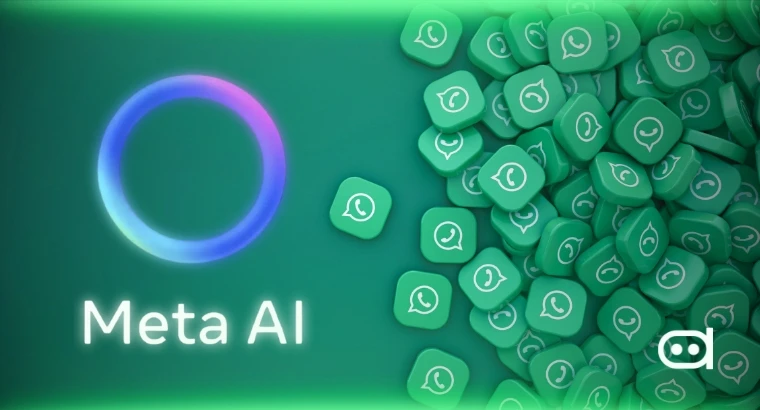
The Commission suspects that the updated policy may prevent Meta’s third-party rivals from reaching their customers through WhatsApp. As a reminder, Meta’s own AI service, dubbed Meta AI, is accessible to everyone via WhatsApp. lf proven, such practices could be considered as anti-competitive under Article 102 of the Treaty on the Functioning of the European Union (TFEU) and Article 54 of the European Economic Area (EEA) Agreement.
WhatsApp is one of the widely used messaging platforms. No wonder, many businesses rely on the app to communicate with their customers. But, Meta doesn’t seem to let that happen, as it plans to implement the updated rules via an update to its WhatsApp Business Application Programming Interface (API) terms.
You may also like to read: Meta Scores Major Coup, Poaches Apple’s Alan Dye
The investigation doesn’t cover Italy
For third-party AI providers already using WhatsApp, the policy takes effect on 15 January 2026. For newcomers, the restrictions have been in place since 15 October 2025. The formal investigation by the Commission will cover the EEA, excluding Italy, to avoid overlapping with ongoing proceedings by the Italian Competition Authority.
Meta’s position is that the updated policy is designed to ensure quality and reliability for businesses using WhatsApp. However, regulators will need to assess whether the changes unfairly favor Meta’s own AI service over competitors. The Commission has emphasized that a probe does not prejudge the outcome and that all parties will have the opportunity to present evidence before a final decision.
You may also like to read: Singapore Threatens Heavy Fines as Meta Faces Scrutiny Over Facebook Scams
Regulators have been actively monitoring all AI services
This move is part of a wider EU initiative to monitor AI markets across Europe. Following a consultation launched in January 2024 and the publication of a policy paper on AI in September 2024, the Commission has repeatedly voiced the need to prevent anti-competitive practices in AI services.
As AI increasingly becomes common in messaging apps, regulators are now watching closely to ensure that AI platforms remain open to fair competition and that companies adapt their business models to comply with evolving rules.
The investigation comes at a time when regulators are pressing AI companies on transparency, privacy, and ethical use of the technology across Europe. If Meta is found guilty, the European Commission could influence its policy and potentially take some actions in 2026.