The ongoing war between Israel, the US, and Iran continues to fuel political tension. Alongside it, media is under massive scrutiny. As the headlines around the war have become the major talk of the hour, the information battle surrounding the conflict is becoming just as intense. At a time when artificial intelligence is increasingly influencing how information spreads online, concerns about manipulated media and propaganda are also growing. That debate just took a new turn on Sunday after U.S. President Donald Trump accused Iran of using AI to spread misleading narratives about the war.
Trump accuses Iran of weaponizing AI to spread war propaganda
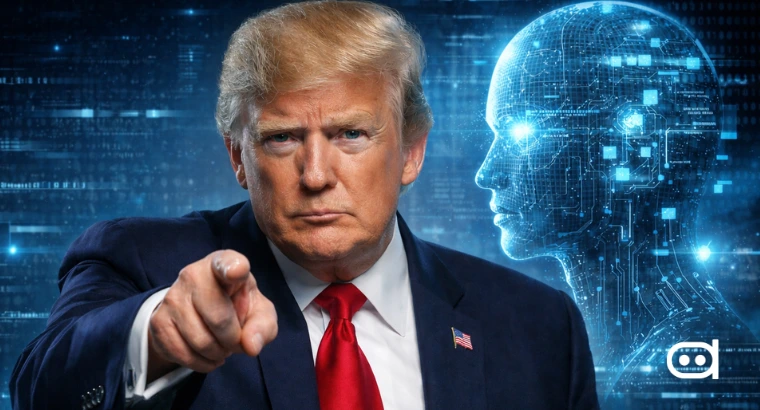
As reported by Reuters earlier today, Trump, while speaking to reporters on Air Force One, said that AI could become a powerful disinformation tool if left unchecked. “AI can be very dangerous, we have to be very careful with it,” he said. The comments came shortly after Trump took to Truth Social, where he accused Western media outlets of spreading AI-generated “fake news.”
Trump alleges that Iran had used AI-generated content to exaggerate military successes and influence public perception. Among the examples he cited were claims that Iran had displayed “kamikaze boats” that do not exist and created AI-generated images suggesting a successful strike on the USS Abraham Lincoln aircraft carrier.
Iranian state media did report that its military struck the carrier, though the claim has not been widely reported by Western outlets. Reuters confirmed separate footage from the Iraqi port of Basra showing explosive-laden Iranian boats attacking two fuel tankers, killing at least one crew member. As per the Reuters report, Trump also questioned images circulating online that allegedly showed 250,000 Iranians rallying in support of the country’s new Supreme Leader, Mojtaba Khamenei. He argued the images were “totally AI generated” and said the event never happened.
Also read: Anthropic Seeks Court Stay on Pentagon’s “Supply-Chain Risk” Label
Western Media outlets are already on the U.S. government’s radar
The remarks come as tensions rise between U.S. regulators and broadcasters. Federal Communications Commission Chairman Brendan Carr recently warned that networks could face license scrutiny if they fail to “correct course” on their coverage of the war. While Trump didn’t name the Western media outlets he believes coordinated with Iran or relied on AI-generated content, the accusations highlight a growing concern that in an ongoing war, the battle of narrative isn’t just being fought with weapons but also emerging tech like AI.
What’s your take on this? Do let us know in the comments below.