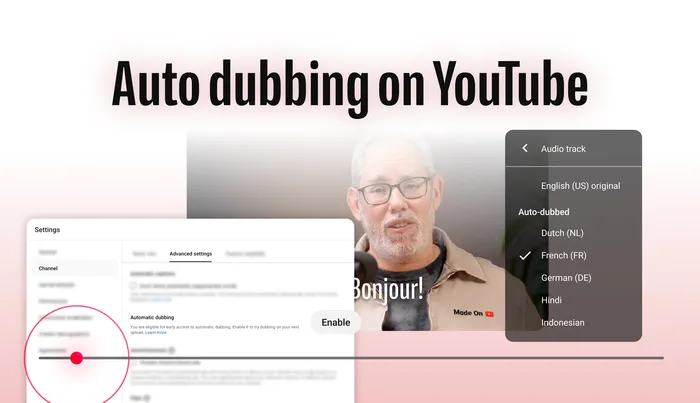
For years, discovering YouTube creators from other parts of the world came with a familiar trade-off. You either accepted awkward subtitles or skipped the video altogether. Language has always been the barrier that decides what content travels and what stays local. YouTube has been trying to remove those barriers for a while now. To give you an example, YouTube started with basic captions, then came auto-translation, and eventually AI-powered voice dubbing. Today, the video streaming giant has announced its biggest AI voice dubbing update yet.
YouTube expands auto dubbing with more languages
In the announcement post, YouTube mentioned that it wants to make global content easier to watch, easier to understand, and more natural to experience. The latest updates focus on better language support, improved realism, and more control for both viewers and creators. As part of this push, AI-powered auto dubbing is now available to all creators, with support expanded to 27 languages. According to YouTube, more than 6 million daily viewers watched at least 10 minutes of auto-dubbed content on average in December alone. That number highlights how quickly the feature is becoming part of everyday viewing.
Moving on, YouTube has also announced a new feature called Expressive Speech across eight major languages. Those include English, French, German, Hindi, Indonesian, Italian, Portuguese, and Spanish. The idea is to preserve a creator’s tone, emotion, and delivery, rather than replacing it with flat, robotic narration. In short, it’s not just translating words anymore. YouTube is actually taking help of AI to mimic the personality in different languages.
You may also like: YouTube Introduces New Parental Controls to Limit Shorts, Reduce Teens’ Screen TimeAuto_Dubbing_on_YouTube
More control for viewers and improved lip-sync realism
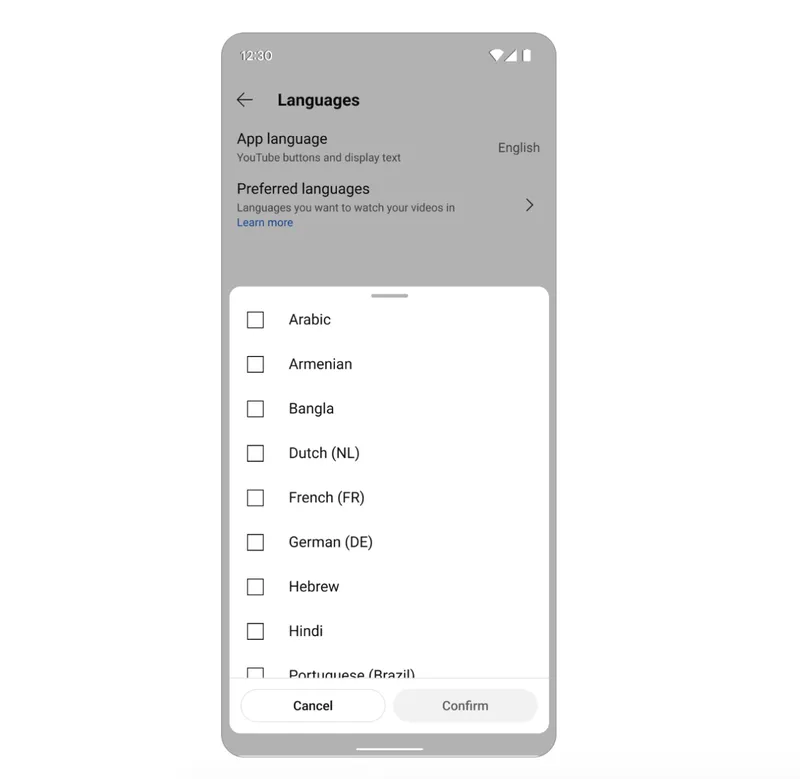
YouTube is also addressing one of the biggest complaints around auto dubbing: lack of choice. While the platform already defaults to languages based on watch history, users can now manually select a Preferred Language. Speaking of what I’ve witnessed, these days even YouTube Shorts come auto dubbed. And it’s weird when a creator, who I’m habituated to watching in my local language, has auto-dub turned on by default. Yes, there’s always an option to switch back to the original language, but I wish it would have been great if YouTube didn’t auto-dub videos from local creators.
As far as realism is concerned, YouTube is also currently testing a lip-sync pilot. The feature subtly adjusts a speaker’s mouth movements to match the translated audio, making dubbed videos feel closer to the original. The company says the goal isn’t perfection but reducing the visual disconnect that often makes dubbed content feel unnatural. If successful, this could be one of the biggest quality upgrades to AI dubbing yet.
You may also like: YouTube’s New AI Deepfake Detection Tool Sparks Concerns Over Creator Biometrics
Creators get smarter tools
Creators are also part of these improvements. A new Smart Filtering system automatically detects videos that shouldn’t be dubbed, such as music-only uploads or silent vlogs. This helps preserve creative intent without manual intervention. YouTube also confirmed that auto dubbing does not negatively affect discovery. In fact, it may help videos reach new audiences across different languages. Moreover, creators still retain full control, with the option to upload their own dubs or disable the feature entirely.