Key Highlights:
- Opera integrates Google’s latest Gemini models to power its revamped browser-based AI across Opera One, GX, and Neon.
- New AI features include faster responses, voice I/O, and privacy controls with user-managed context sharing.
- Opera’s growing browser AI focus supports richer query processing and deeper monetization beyond traditional search.
In one of my editorials from last month, I talked about how Comet AI browser’s assistant can pull off different tasks for you, which is kind of cool, but it is also scary how accurate it can be. On the other hand, there is ChatGPT Atlas, which is OpenAI’s new AI browser that promises something similar to what Comet AI browser is currently offering.
As the AI browser race is picking up pace, Opera is taking help from Google to boost AI capabilities across its browser fleet. Here I’m talking about Opera One, Opera GX, and Opera Neon browsers, which currently have a cumulative user base of 80 million.
Opera partners with Google to integrate the latest Gemini models for its browser-based AI
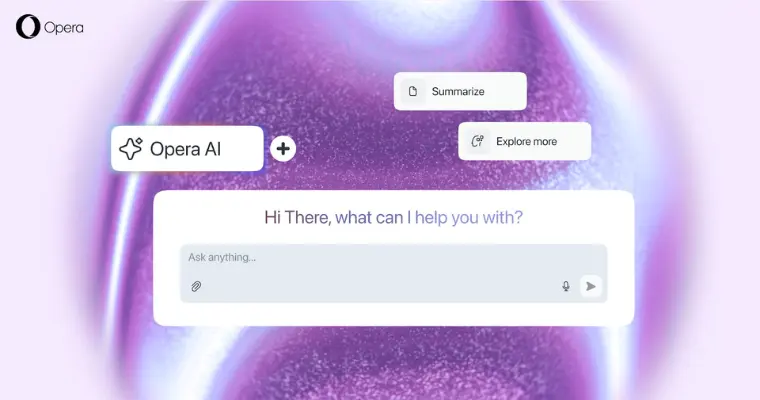
As part of this partnership, Opera is now integrating the latest Gemini AI models into its browser AI. The new Opera AI exists as a side panel that you can interact with whenever you want. It works when you open any of the web pages, groups of web pages, as well as videos, where AI can give you answers based on the browsing context, which includes easy research, content summaries, and even comparisons between different tabs.
Our long-standing partnership with Opera is a testament to our shared vision for an innovative ecosystem. By integrating the latest Gemini models, Opera is not just enhancing its browsers but setting a new standard for AI-powered user experiences. We are proud to provide the cutting-edge AI capabilities that help partners like Opera thrive and continue to shape the future of browsing for millions of users worldwide.
– Per Gustafsson – Managing Director Nordics at Google
Also read: Google’s Gemini 3 Sparks Emergency Inside OpenAI — Sam Altman Declares ‘Code Red’
New AI features and privacy controls
With this update, Opera AI also gets voice input and output support, as well as file analysis on multiple file types including image and video. Opera, in its announcement, says that the engine has been rebuilt for speed with a new architecture which adopts a genetic-based engine from Opera Neon. That is why the new Opera AI is capable of offering 20% faster responses than it used to. On top of that, Opera is also ensuring privacy features while giving full control to users. You’ll have controls over what context is shared with Opera AI and what’s kept outside of its awareness.
AI is reshaping how people interact with the web, and the browser is the natural entry point for those experiences. Through our partnership with Google, we are able to offer users the experiences they really want through native search and AI features, for free, directly in their Opera One and Opera GX browsers while our most advanced users of the agentic Opera Neon browser are already getting access to Gemini 3 Pro.
– Per Wetterdal, EVP Commercial at Opera
Also read: Gemini 3 Unpacked: What’s New for Developers
AI now shapes browsing, and revenue
As I mentioned earlier, AI has become an integral part of the browsing experience these days, and it’s also reflecting on how browsing is being monetized. In the latest earnings results, Opera reported a 17% annual jump in query revenue alone. This suggests that monetization of user-initiated actions in Opera browsers is far more than the classic search as it also covers the increasing usage of AI. Moreover, Opera says its browser-based AI has been designed to “natively support an expanding richness in the processing of user queries, representing an interface where users can identify products and services of interest and connect with e-commerce and other platforms of direct relevance to them.”
If you want to read about Comet’s hands on review, or more on Atlas, you can do it from here.