With the rise of generative AI, creative ownership has been a hot topic worldwide. As AI tools like ChatGPT, Gemini, and others are becoming much more capable of generating images, text, and music independently, legal questions about copyright infringement and authorship are intensifying. Who truly owns content generated by AI, and can it ever qualify for legal protection? Well, the U.S. Supreme Court may have just answered that question.
Thaler’s AI artwork sparks landmark copyright debate
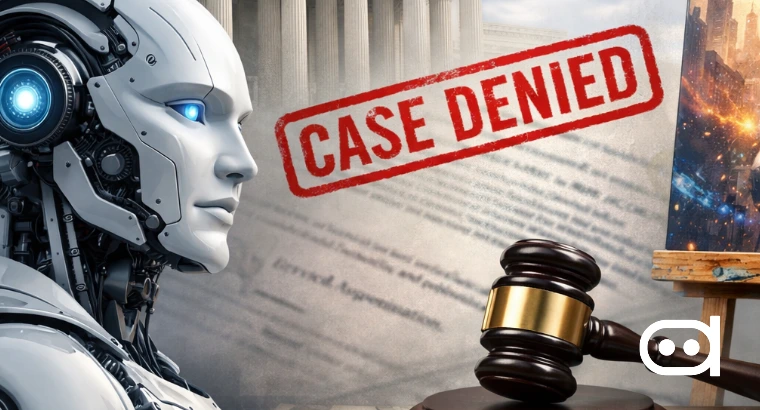
As reported by Reuters, the U.S. Supreme Court has declined to hear a case this week that could have clarified the issue for AI-generated visual art. The legal dispute involves Stephen Thaler, a computer scientist from Missouri, whose AI system “DABUS” created a piece titled A Recent Entrance to Paradise. The AI-generated image shows train tracks entering a portal, surrounded by vivid green and purple plant imagery. Thaler reportedly applied for a federal copyright in 2018 for the art, which he claimed was independently generated by his AI.
The U.S. Copyright Office reportedly rejected the application in 2022, citing a fundamental requirement for legal protection. A federal judge in Washington upheld that ruling in 2023, stating that human authorship is a “bedrock requirement of copyright.” The U.S. Court of Appeals for the District of Columbia Circuit confirmed the decision in 2025.
However, Thaler argued that the case was important, warning that the Copyright Office’s ruling could hinder AI adoption and creative experimentation at a time when the technology is booming. Notably, the Trump administration had also urged the Supreme Court not to hear Thaler’s appeal. It noted that multiple provisions in the Copyright Act define “author” as a human rather than a machine.
So, it’s safe to say that the court’s refusal keeps the human-authorship requirement intact, while drawing a legal boundary as AI continues to evolve. In the past, the Copyright Office has denied similar applications from artists using AI systems like MidJourney. That said, some of those cases involve collaboration between human and AI, rather than fully AI-generated art. That distinction matters in Thaler’s context. Currently, U.S. law recognizes human involvement as the key criterion for protection, meaning AI alone cannot claim rights, even if it generates original works.
You may also like: Amazon Reportedly Also Considering Publisher Marketplace For AI Content Licensing
Thaler’s lawyers warn of risks to AI creativity
Thaler’s lawyers reportedly warned that delays in updating copyright guidance could “irreversibly and negatively impact AI development and use in the creative industry,” emphasizing the growing need for legal clarity. The Supreme Court’s decision to decline the hearing leaves AI-generated works in a gray zone. In other words, it triggers uncertainty for artists, technologists, and companies looking to use AI for creative works.