Key Highlights:
- Liquid AI has launched a new set of small AI models designed to run directly on devices instead of the cloud.
- The models can work with text, images, and audio, and are built to be faster and more private.
- The release reflects a wider industry shift toward AI that works offline, on phones, cars, and smart devices.
Liquid AI Launches New On-Device AI Models for Phones, Cars, and Smart Devices
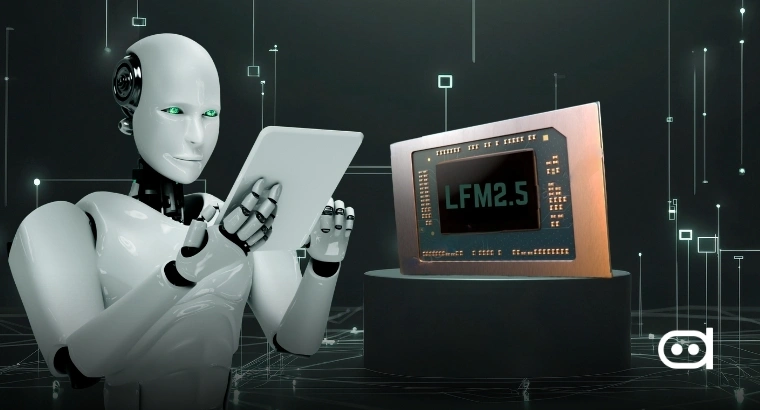
AI startup Liquid AI announced on January 5, 2026, that it is launching a new family of models called LFM2.5-1.2B, designed to run artificial intelligence directly on devices such as smartphones, vehicles, and Internet-connected hardware.
The launch was detailed in a blog post published by the company, outlining its latest push toward on-device AI systems.
Instead of relying on cloud servers, these models are built to work locally, allowing AI systems to respond faster and keep user data on the device itself. This approach is increasingly attractive as companies look for alternatives to always-online AI systems that raise privacy, latency, and long-term cost concerns.
What Liquid AI Is Adding
The main update is not the size of the model, but how it has been trained.
Liquid AI says it has trained this model on much more data than before and spent additional effort teaching it how to follow instructions properly. This helps the AI behave more reliably when used as an assistant or embedded into apps and devices, reducing errors and unpredictable responses.
In simple terms, the company focused on making a small model smarter, rather than making a huge model bigger. This approach reflects a growing view in the AI industry that better training and refinement can sometimes deliver more practical benefits than simply increasing model size, especially for systems designed to run on everyday devices.
One Model, Multiple Uses
Unlike many AI releases that focus only on text, this launch includes several versions of the model:
A text model for writing, answering questions, and basic tasks, alongwith an audio model that can understand and respond to speech, designed to work smoothly on limited hardware. Furthermore, most importantly, a vision model that can understand images and visual instructions.
These versions are designed to work on devices with limited computing power, such as cars, phones, and IoT systems, without sending data back to a server.
Why “On-Device AI” Matters
Most popular AI tools today depend on cloud servers. That means user data is sent elsewhere, responses can be delayed, and services stop working without internet access.
By contrast, on-device AI:
- Works faster
- Keeps data private
- Can function even without a network connection
Liquid AI is betting that future AI assistants, especially in cars, personal devices, and industrial systems, will need to operate this way.
Open Access for Developers
The company has made all versions of the model open to developers, meaning companies and researchers can download and adapt them for their own products, according to Liquid AI. This allows teams to test, customise, and deploy the models based on their own data and use cases.
Liquid AI is also working with organisations such as AMD and Nexa AI to ensure the models run efficiently on specialised hardware used in modern devices, helping developers deploy AI locally without heavy computing requirements or constant cloud connectivity.
The Bigger Picture
This launch reflects a broader shift in artificial intelligence. Instead of pushing everything to massive cloud systems, companies are starting to build smaller, smarter AI models that live closer to users.
For everyday users, this could mean AI that feels more responsive, more personal, and less intrusive, especially as AI becomes embedded into devices we use regularly.